
GARM · Roatán, Honduras

VEGF Gene Therapy · Erectile Dysfunction
Most erectile dysfunction is vascular. VEGF gene therapy aims to regrow and repair the vessels and endothelium of the erectile tissue itself, addressing a root cause rather than masking it on demand.
Investigational use. Strong preclinical rationale; not an approved treatment for ED.
The problem
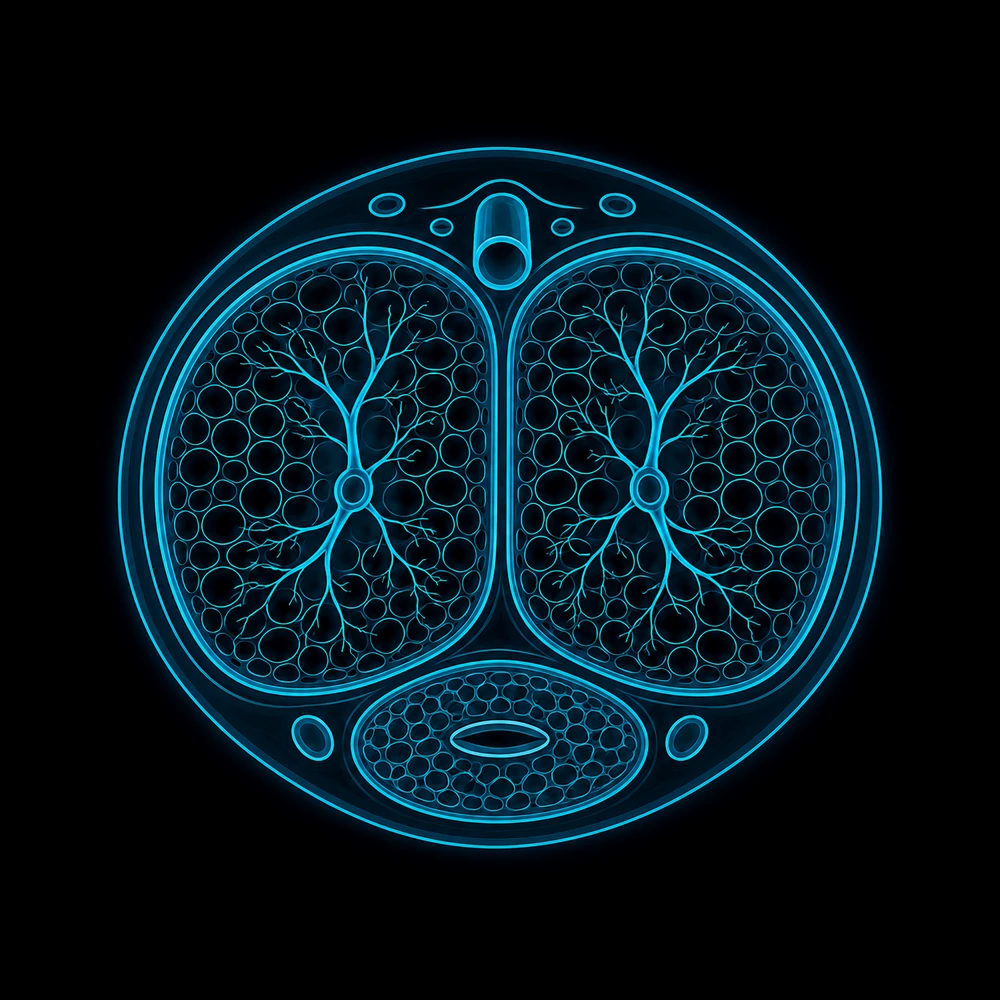
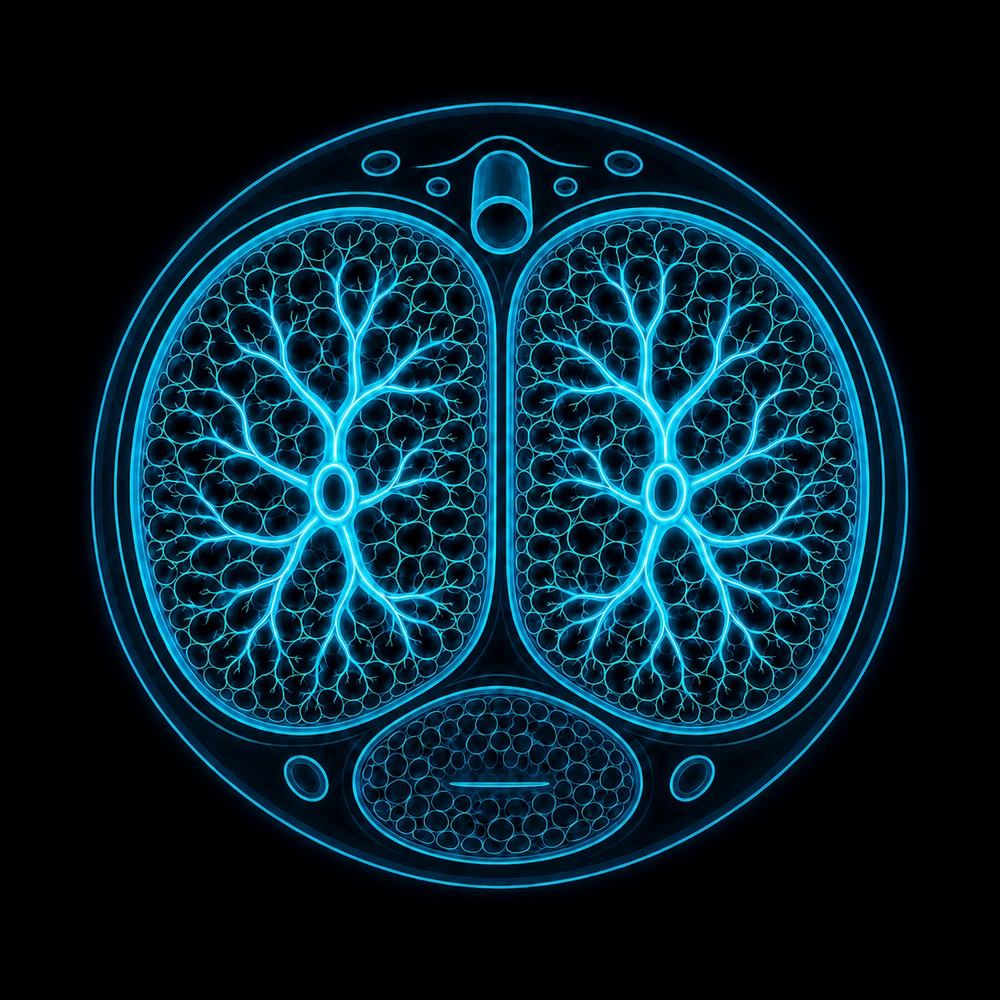
An erection is hydraulic: arousal signals the endothelium to release nitric oxide, vessels relax and dilate, and blood fills the corpus cavernosum faster than it drains. That whole sequence depends on a healthy vascular bed.
Diabetes, atherosclerosis, high blood pressure, aging, and pelvic surgery damage those vessels, their lining, and their nerves. Pills that amplify the signal help less and less as the underlying supply degrades. ED is also an independent predictor of future cardiovascular disease, often the first visible sign of trouble in the vascular system.
Not sure where you stand? Take the 1-minute ED self-test.
52%
of men aged 40 to 70 report some degree of erectile dysfunction
Massachusetts Male Aging Study, J Urol 1994
~1.4 to 1.6×
ED independently predicts future cardiovascular and coronary events
Meta-analysis of 154,000+ men, J Sex Med 2019
~half
of intercourse attempts still fail on PDE5 pills in men with diabetes
Rendell, JAMA 1999; Fonseca, Diabetologia 2004
How it works
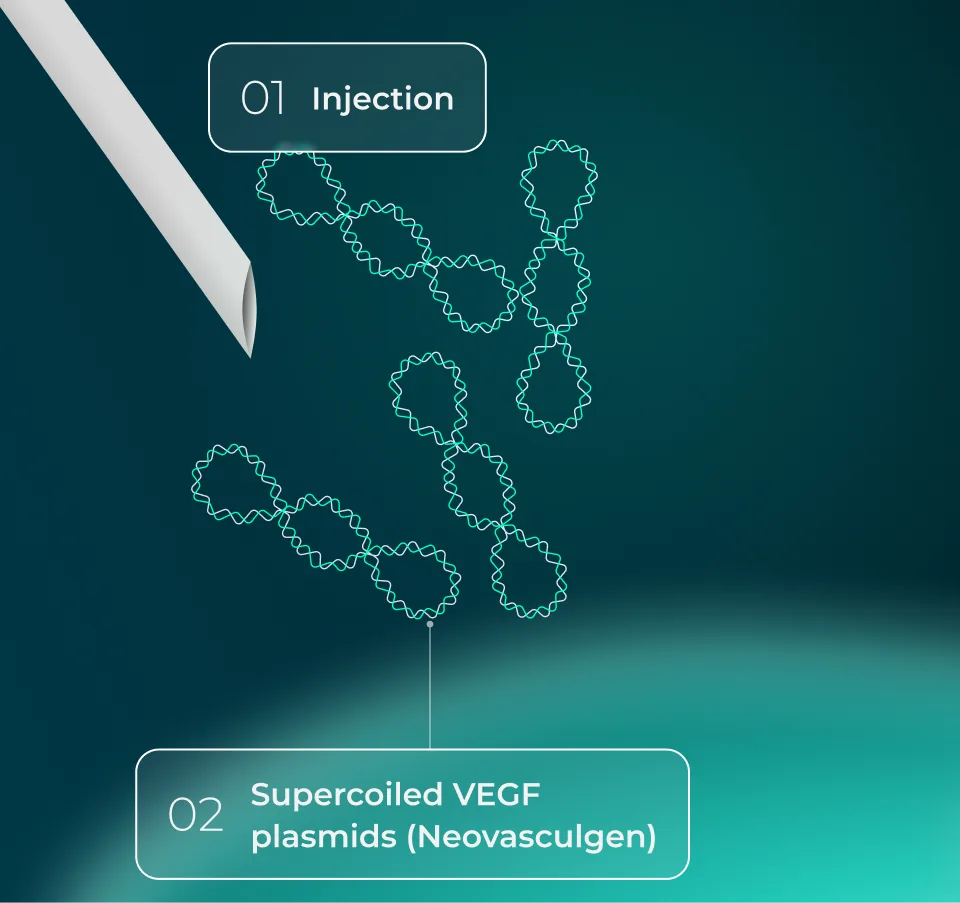
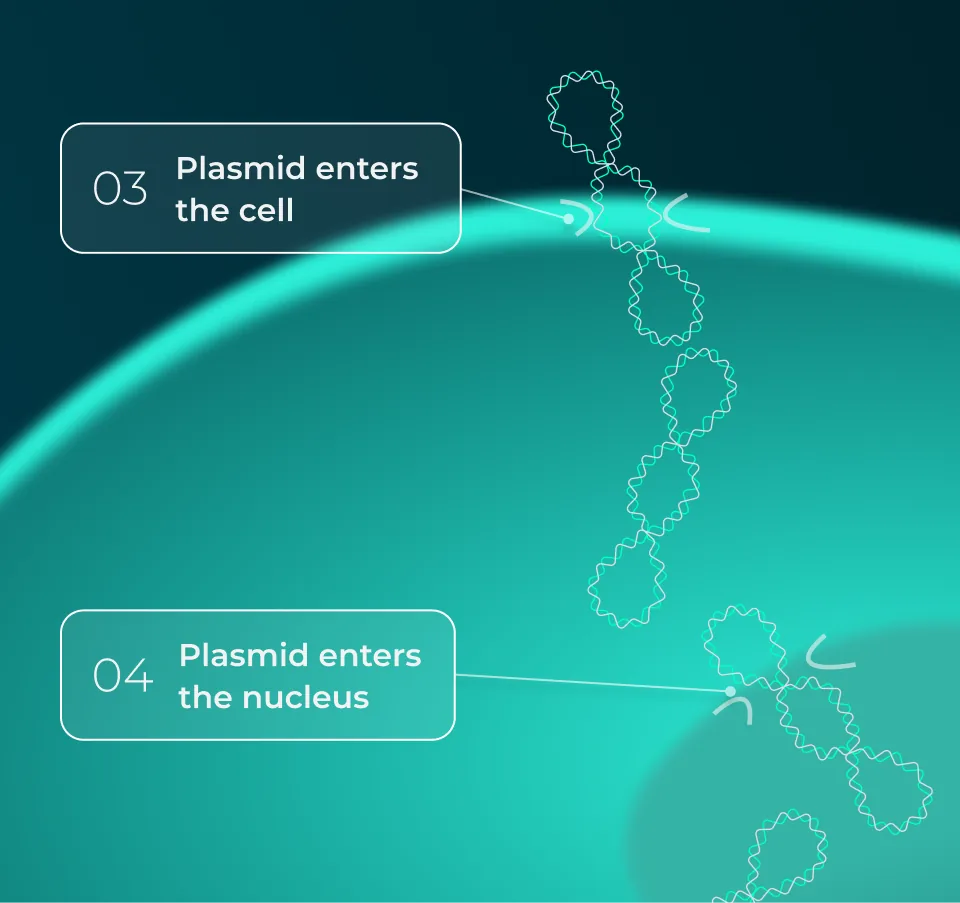
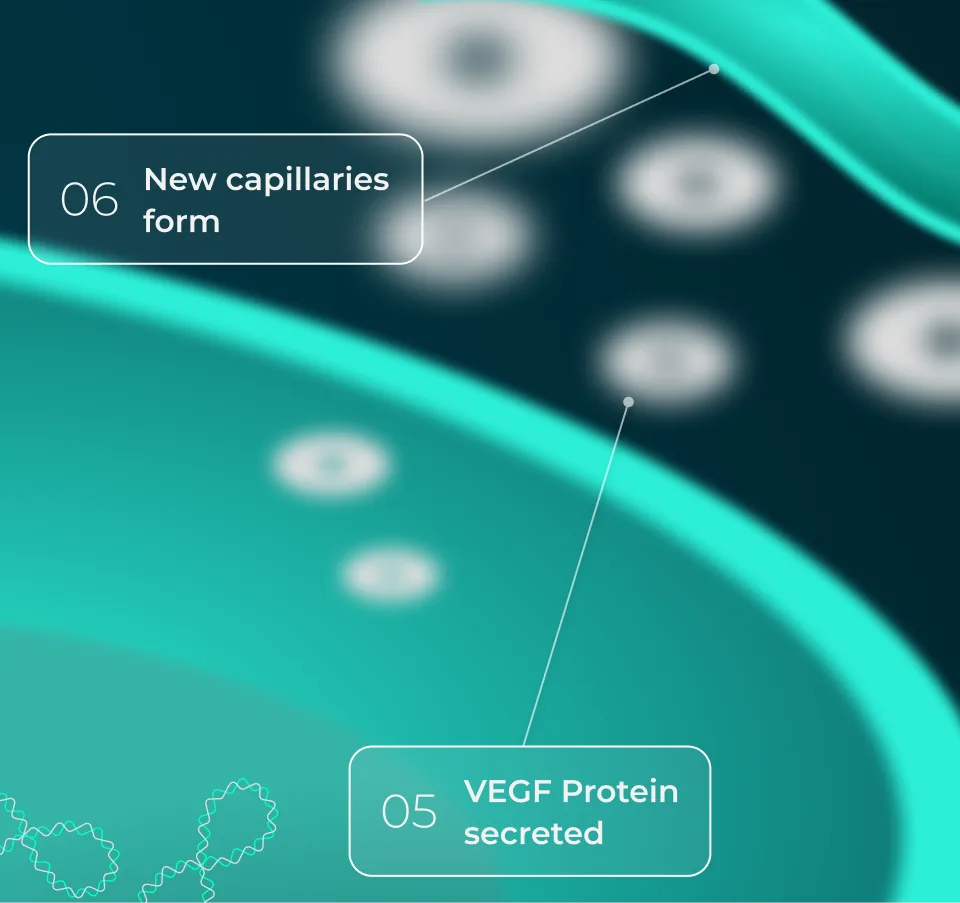
A plasmid delivers the VEGF gene into the erectile tissue. The cells begin producing VEGF protein locally, which signals the growth of new, functional blood vessels and supports the endothelial lining that releases nitric oxide, the molecular trigger of an erection.
The therapy is local and tissue-targeted. The plasmid supplements the cell's activity without changing or integrating into its DNA, persists only temporarily, and cannot be passed to future generations.
Arousal in motion
An erection is a fill event: arousal opens the inflow and the cavernosal sinusoids engorge as the vascular tree lights up. VEGF's role is to rebuild that vascular bed so the tissue can respond.
What changes
These are the mechanisms VEGF acts on, demonstrated in preclinical models. They describe how the therapy is intended to work, not guaranteed clinical outcomes.
↑ inflow
Cavernosal blood supply
VEGF drives angiogenesis: new and repaired vessels that fill the corpus cavernosum during arousal.
Endothelium
Repaired vessel lining
It supports survival and regrowth of the endothelium that releases nitric oxide, the trigger and sustainer of an erection.
Smooth muscle
Tissue preserved
In animal models, VEGF preserved cavernosal smooth muscle and reduced the fibrosis that stiffens erectile tissue.
Nerve support
Neuroprotection
VEGF protected and aided recovery of the cavernous nerves after injury in preclinical models, relevant to post-surgical ED.
Local
Targeted delivery
Delivered directly into the erectile tissue, the effect stays where it is needed rather than acting systemically.
Root cause
Vascular, not on-demand
Aims to rebuild the blood supply itself, addressing a cause of vasculogenic ED rather than masking it pill by pill.
Preclinical evidence
Across rat models of diabetic, arteriogenic, venogenic, and nerve-injury erectile dysfunction, intracavernosal VEGF (as protein or gene therapy) restored erectile responses toward normal. This is the foundation for human study; it is not yet human proof.
~84%
Erectile pressure restored
VEGF-gene-modified stem cells returned the ICP/MAP ratio to about 84% of normal in diabetic rats, beating cells or gene alone (PLoS ONE, 2013).
31 → 47
mmHg, VEGF plasmid
A non-viral VEGF plasmid raised intracavernous pressure toward the normal ~63 mmHg in diabetic rats (Dall’Era et al., 2008).
Intracavernosal VEGF gave dose-dependent recovery of erectile function after arterial injury.
Lee et al., J Urol, 2002
VEGF lifted the peak ICP/MAP ratio to ~80% versus ~63% in untreated aged rats.
Park et al., Eur Urol, 2004
VEGF protein and AAV-VEGF prevented and reversed venous-leak ED and preserved cavernosal smooth muscle and nerves.
Rogers et al., Int J Impot Res, 2003
A non-viral VEGF plasmid partially restored intracavernous pressure (31 → 47 mmHg; normal ~63).
Dall’Era et al., Int J Impot Res, 2008
Intracavernosal VEGF restored erectile pressure and partly reversed endothelial and nerve damage.
Gholami et al., J Urol, 2003
VEGF combined with BDNF roughly doubled erectile pressure versus injured controls (~63–72% of normal).
Hsieh et al., BJU Int, 2003
VEGF-gene-modified stem cells restored the ICP/MAP ratio to ~84% of normal, outperforming cells or gene alone.
Qiu et al., J Androl, 2012; PLoS ONE, 2013
Safety
The same VEGF plasmid has treated over 20,000 patients, on the market since 2012. In the 5-year follow-up the investigators recorded no adverse events they attributed to the plasmid and no impaired vision, and no individual disease occurred significantly more often than on standard therapy. Applying it to erectile tissue is investigational, so procedure-specific risks are reviewed with you directly.
What to expect
Where to get it
GARM · Roatán, Honduras
GARM · Bahamas
Most erectile dysfunction is a blood-flow problem: an erection depends on healthy vessels and endothelium filling the corpus cavernosum. A plasmid delivers the VEGF gene into the erectile tissue, prompting local production of VEGF protein, which triggers angiogenesis and endothelial repair. The goal is to rebuild the vascular supply behind an erection rather than only boosting a single arousal event.
PDE5 inhibitors (sildenafil, tadalafil) amplify a signal that still needs reasonably healthy vessels and endothelium to work, and they act only on demand. VEGF gene therapy targets the underlying tissue, aiming to restore the blood supply and endothelial function themselves. The two approaches are complementary, and men whose vascular bed is most damaged respond worst to pills: in men with diabetes, roughly half of intercourse attempts still fail even on an active PDE5 inhibitor (Rendell, JAMA 1999; Fonseca, Diabetologia 2004), and poor responders show measurably more endothelial damage (Condorelli, Eur J Intern Med 2013).
Not yet. There is no completed human trial of VEGF for erectile dysfunction. The rationale rests on roughly two decades of rat studies (2002–2020) showing VEGF restores erectile hemodynamics across diabetic, arteriogenic, venogenic, aging, and nerve-injury models, delivered as protein, plasmid, AAV, and gene-modified stem cells. The evidence is not uniformly positive, and in humans the same VEGF plasmid is only established for peripheral artery disease (20,000+ patients). Its use for ED is experimental and investigational, and outcomes are not guaranteed.
The mechanism is most relevant to vasculogenic ED: men with diabetes, atherosclerosis, or age-related endothelial decline, and those whose ED responds poorly to PDE5 inhibitors. Men with post-prostatectomy (nerve-injury) ED are a population of preclinical interest. A quick way to gauge where you stand is our 1-minute ED self-test (IIEF-5); eligibility is then assessed individually on a screening call. ED can also be an early warning sign of cardiovascular disease, so a medical workup matters.
As a series of local intracavernosal injections into the erectile tissue, performed by a physician. It is a procedure, not a take-home pill, and the protocol is finalized by the treating doctor.
The VEGF plasmid carries one of the most comprehensive safety records of any gene therapy: 20,000+ patients treated and on the market since 2012, with a 5-year follow-up in which the investigators recorded no adverse events they attributed to the plasmid and no impaired vision, and no individual disease occurred significantly more often than on standard therapy. The plasmid stays outside your chromosomes. Applying it to erectile tissue is new, so local procedural risks are reviewed with you directly.
VEGF gene therapy is offered through our partner clinics in Próspera (Roatán, Honduras), Mexico and the Bahamas. Reach out and the Unlimited Bio team will walk you through eligibility and the details.
References
Gene therapies described on this website are experimental and not approved by the FDA. Effects are not guaranteed, and individual results may vary. Therapies are provided by third parties in Próspera ZEDE (Roatán, Honduras), Mexico and the Bahamas; Unlimited Bio is not a medical provider. Always seek the advice of a qualified healthcare provider with any questions you may have regarding a medical condition or treatment.