Reason on Taking Part in the CALM-AF-AI Trial
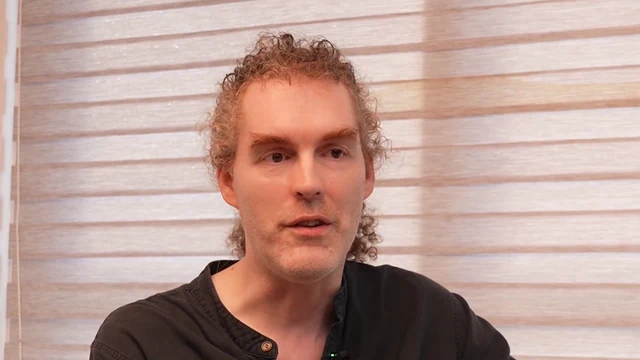
Reason, founder of Fight Aging! and CEO of Repair Biotechnologies, describes taking part in our gene therapy trial in Próspera on the Stranded Technologies Podcast: the testing regime, and why he thinks the approach matters.
Reason, one of the longest-serving writers and advocates in the longevity field, has spoken on the record about taking part in CALM-AF-AI, the gene therapy trial Unlimited Biotechnology LLC is running at GARM in Roatán, Honduras.
He did so on episode 113 of the Stranded Technologies Podcast, recorded in Próspera on 20 July 2026 and published by Infinita City ten days later under the title “Reason on Clinical Trials, Medical Tourism, and the Data the FDA Won’t See”. Asked what had brought him to the island, he answered directly:
I’m here right now just at this time to participate in a clinical trial that’s being run by Unlimited Bio, which is … attempting to bring some of what’s going on in medical tourism into a better state for the FDA and the regulated side of the house.
What being in the trial is actually like
Asked about his own experience of the protocol, he was blunt about the testing:
My experience is they’re taking a hell of a lot of blood from me, on a very regular basis. Think about how many tests you’d want to run on somebody who just had an AAV follistatin gene therapy, and now multiply the time by six and the number of tests by five, and off you go. So a lot of testing, a lot of, like, overcaution, we should say.
We will take that as a fair description. The measurement schedule is the point of the exercise, and it is the part that distinguishes a trial from a treatment.
Who Reason is
Reason has written Fight Aging! for more than fifteen years, which makes it one of the longest continuously running publications covering rejuvenation research. He is also co-founder and CEO of Repair Biotechnologies, the company he started in 2018 with Bill Cherman to work on cardiovascular disease, and he holds master’s degrees in astrophysics from the University of St Andrews and in space physics from Rice University.
On the jump from astrophysics to medicine, he is unsentimental:
Astrophysics and medicine, there really isn’t an awful lot of difference at the high level. They’re both studying things that are enormously complex about which we know tiny fractions of what’s going on. It’s just stars and people.
On why he founded a biotech company at all, he gives the credit away:
You can blame my co-founder for that. He talked me into it.
That combination is what makes his account worth hearing. He runs a therapeutics company, he has read the field’s evidence base for fifteen years, and he has now been on the receiving end of a protocol himself.
Why he thinks the approach matters
Most of the episode is about the machinery around trials rather than about any one therapy. His central complaint is that the useful evidence never surfaces. Simple gene therapies, follistatin chief among them, have been given in the medical tourism space for close to twenty years, and almost none of that experience has been written down:
Sadly, that means that most of the information out there is just never going to come to light, because medical tourism clinics have no incentive whatsoever to publish what they’re doing.
He compares it to stem cell therapy, where he argues decades of sound empirical practice stayed private for exactly the same reason. What he describes Unlimited Bio as doing is an attempt to sit between the two worlds:
They’re coming to Próspera to be able to do a medical tourism cost trial using formal FDA style processes. And that doesn’t actually cost that much more than not doing it that way.
And the reason to bother with the paperwork at all:
The hope is at the end of the day, you have something you can put in front of the FDA, and they won’t throw you out just because you did it outside the US.
He is careful not to promise that this works. His own summary of the best available outcome is that the agency looks at the data, says “please don’t do it again”, and looks at it anyway.
The trial he took part in
CALM-AF-AI is a Phase 1/2a, open-label, sequential dose-escalation study of AAV9-follistatin gene therapy, given alone and then in combination with a VEGF plasmid, in adults with age-related muscle decline. It is registered on ClinicalTrials.gov as NCT07443826, sponsored by Unlimited Biotechnology LLC, and is recruiting approximately 12 adults aged 35 to 75 at GARM in Roatán, Honduras.
These therapies are experimental and are not approved by the FDA. Unlimited Bio is not a medical provider; the trial is conducted at the study site named above, and the ClinicalTrials.gov record is the authoritative description of the protocol.
Quotations above are from the episode, lightly trimmed of verbal fillers and repetitions, with nothing added. Our thanks to Reason for speaking about the experience on the record, and to Infinita City for the conversation.
Vladimir Leshko